Some films refuse to let you go.
Not because they offer easy answers, but because they leave you with questions that linger long after the lights come back on. They challenge assumptions, complicate familiar narratives, and remind us that freedom is never an abstract ideal. It is lived, defended, and, too often, fought for.
That was the spirit behind the first edition of Stories of Freedom in 2025, when the film day debuted in Berlin as part of Berlin Freedom Week and Straße der Demokratie. Rather than presenting freedom as a political slogan, the program explored it through deeply personal stories: stories of resistance, courage, sacrifice, and hope.
One year later, we are excited to announce the second edition of Stories of Freedom. And we are inviting filmmakers from around the world to become part of it.
Call for Films 2026
We are looking for documentaries, feature films, animations, hybrid works, and immersive experiences that tell stories of courage, resistance, accountability, and human dignity. Films that ask difficult questions. Films that stay with us.
Submission deadline: 31 August 2026
Eligibility: Feature-length films completed in late 2025 or during 2026.
Categories
- Defending Press Freedom
- Fighting for Democracy
- Resisting Gender Apartheid
- Artivism
- Demanding Justice
- Exposing Corruption
- Best Immersive Work (VR/XR)
Eligible formats
- Documentary
- Fiction feature
- Animation
- Hybrid works
- VR, AR, 360° and interactive experiences (Best Immersive Work)
Official Selection: Early October 2026
Stories of Freedom Film Day & Berlin Freedom Film Awards: 11 November 2026, Colosseum Berlin
Submission fee: Free of charge
Looking Back: Stories of Freedom 2025
The inaugural edition brought together outstanding films, filmmakers, journalists, activists, and civil society organizations around a simple conviction: cinema has a unique ability to make complex political realities profoundly human.
Across documentaries and feature films, audiences encountered people confronting authoritarianism, corruption, war, censorship, and systemic injustice—not through headlines or statistics, but through individual lives and lived experiences.
The program featured films including Be My Voice, Scars of a Putsch, Streets Loud with Echoes, Kherson: Human Safari, Hambre, and Rule Breakers. Every screening was followed by a conversation that carried the themes of the film beyond the cinema and into the pressing debates of our time.
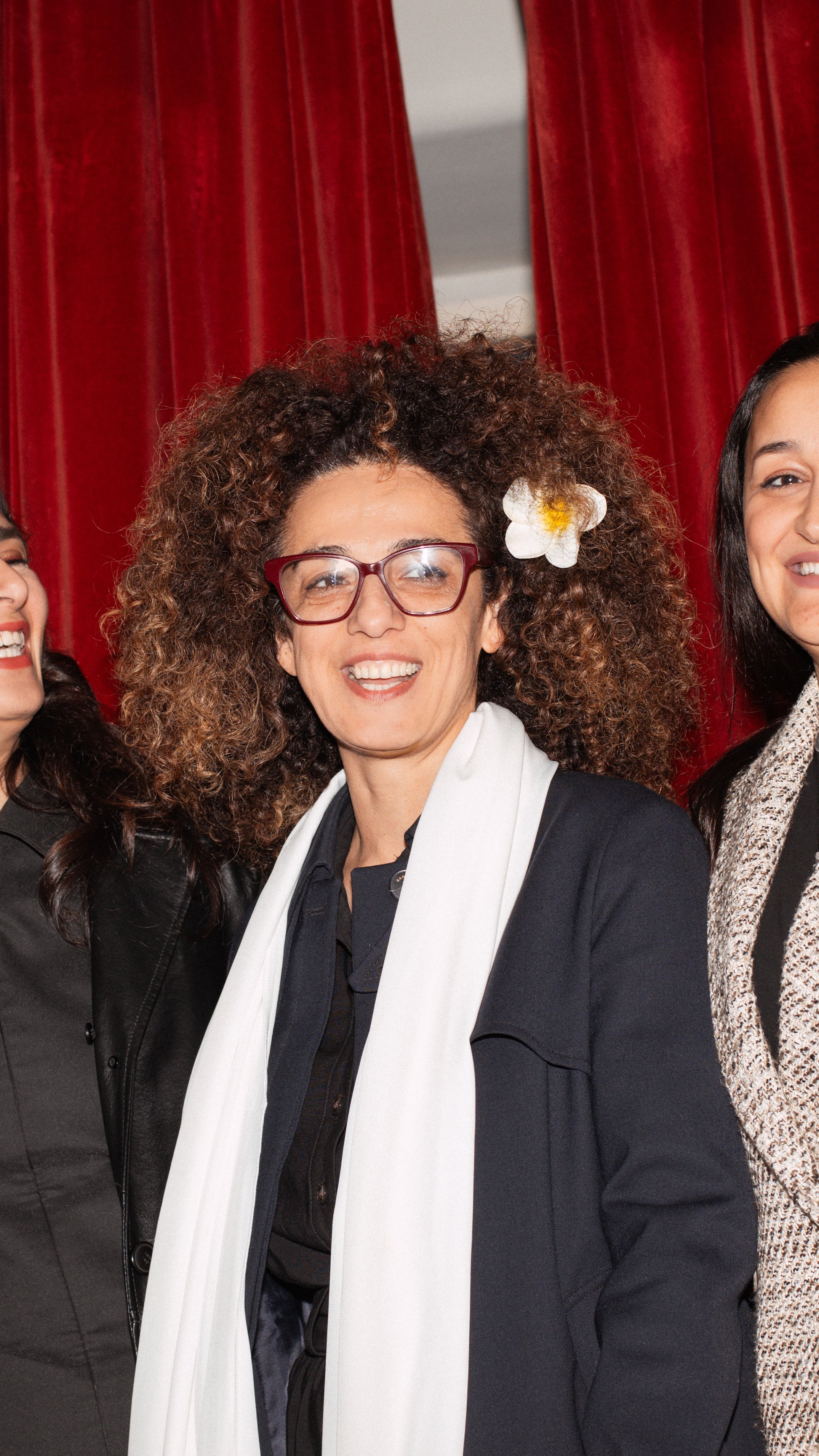
Following Be My Voice, Iranian activist Masih Alinejad, co-founder of the World Liberty Congress, reflected on the importance of speaking out against authoritarian regimes—and on the personal consequences that public resistance often carries.
After Scars of a Putsch, journalist Can Dündar and filmmaker Nathalie Borgers discussed press freedom, political persecution, and what it means to continue fighting for democracy from exile.
Rule Breakers, the inspiring story of Afghanistan's first all-girls robotics team, brought together Düzen Tekkal, Roya Mahboob, Hannah Neumann, Sadaf Zahedi, and Shila Bahjat to discuss the current situation in Afghanistan, the systematic exclusion of women and girls from education, and why international solidarity remains indispensable.
For Hambre, Joanna Nelson, Roberto Pérez Rocha of Transparency International, and Venezuelan opposition leader and World Liberty Congress co-founder Leopoldo López explored how corruption erodes democratic institutions while profoundly shaping individual lives.
One of the day's most powerful conversations accompanied Kherson: Human Safari. Developed in partnership with Be an Angel, the panel featured director Zarina Zabrisky, Oleksandra Pavlenko of Be an Angel Ukraine, and Julett Pineda of Deutsche Welle, moderated by Johannes Voswinkel, Head of the Heinrich Böll Foundation's Ukraine Office. Together they examined the documentation of war crimes, violence against civilians, and the role of journalism and film in bearing witness.
Meanwhile, Streets Loud with Echoes provided historical and political context for Kazakhstan's protest movement. Director Katerina Suvorova placed the events within a broader narrative of resistance and memory while creating a space for dialogue with Berlin's Kazakh exile community.
The film program was complemented by a virtual reality installation and a photography exhibition, offering immersive perspectives on many of the themes explored throughout the day.
Looking Ahead: Stories of Freedom 2026
This November, Stories of Freedom returns to Berlin as part of Berlin Freedom Week with an expanded vision.
At its heart, the idea remains the same: powerful films can create spaces for democratic dialogue, political education, and meaningful exchange. But the format will grow in ambition and international reach.
For the first time, Stories of Freedom will introduce the Berlin Freedom Film Award, recognising exceptional filmmaking across six thematic categories. Each selected film will become part of the official Stories of Freedom program, while an international high-profile jury will honour one outstanding work in every category during the film day on 11 November 2026 at Colosseum Berlin.
Rather than simply presenting films, Stories of Freedom creates encounters. Every screening is paired with conversations featuring filmmakers, journalists, activists, academics, and human rights defenders, creating a unique space where cinema becomes the starting point for deeper public dialogue.
The goal is not simply to celebrate outstanding filmmaking, but to recognise stories that illuminate injustice, defend democratic values, and give audiences a deeper understanding of the world we share.
Stories of Freedom 2026 is an initiative of The Good Media Network, taking place as part of Berlin Freedom Week with the support of the Senate Chancellery of Berlin and Berliner Sparkasse at the Colosseum Berlin, in partnership with Meine Schönhauser Allee. Berlin Freedom Week is a joint initiative of the Berlin Freedom Society e. V., the World Liberty Congress, the Robert Havemann Society, the Axel Springer Freedom Foundation, and visitBerlin.